

What it means to be human has been completely reoriented.
We've uncovered how to ground meaning in reality itself.
We finally understand who we are.
The book is now available on Amazon.
A transformative framework for discovering humanity’s place in the structure of reality.
The EPUB version allows you to read in your browser or the BookFunnel app, or download the EPUB for a compatible reading app or device.
The Audiobook version can be accessed in your browser or the BookFunnel app, which you can download here.
Share this page.
There was once “I”, “you”, and “them”; now there is only the self extended through others.
01
The Real Source of Meaning
Discover why meaning is not something you must invent or believe in, but something that emerges naturally from your participation in reality.
02
Why You Feel Unmoored
Understand how the collapse of shared narratives quietly destabilised the psychological foundations of modern life — and why that loss was structural, not personal failure.
03
The Hidden Architecture of the Self
See how your sense of “I” is not a story or illusion, but a stable centre of experience with a specific structure and orientation that can be strengthened, clarified, and aligned.
04
The True Function of LoveExplore how love is not merely an emotion or moral ideal, but a fundamental organising principle woven into the fabric of reality itself.
05
Good and Evil Reframed
Discover how morality emerges from the structure of self-awareness itself — and why it does not need heaven or hell to matter.
06
Why Religion Worked — and Why It Faltered
Understand how religion once stabilised meaning, purpose, self-worth, and belonging, and why it now struggles to carry that psychological load.
07
The Limits of Psychology and Philosophy
Discover why centuries of thought and therapy have not stabilised meaning — and what needs to change.
08
The Meaning Crisis Explained
See why modern life can function outwardly while feeling inwardly hollow — and how vitality quietly drains long before systems collapse.
09
The Purpose of Life
See why purpose is not a motivational construct, but a directional feature built into the trajectory of conscious life.
10
Unconditional Love Made Practical
Learn why unconditional love cannot be sustained through moral demand — and what inner conditions must exist for it to become stable.
11
Emotional control
Understand the difference between causal and moral responsibility — and gain a clearer, steadier basis for judgement and action.
12
Where You Fit In
Discover how recognising your structural location within reality reframes agency, belonging, and influence without appeal to belief.
Discover how to orient yourself in the world as it is.
In this ground-breaking book, the author proposes a model of reality in which mind and matter arise from the same source and redefines the foundations of meaning, purpose, and selfhood for a secular age.
Why should I read it?
Understand why meaning, purpose, self-worth and belonging feel unstable in modern life.
Discover why religion, philosophy and psychology have not been able to secure lasting grounding.
Uncover the structural explanation for the so-called “meaning crisis"
Understand what the Self actually is — beyond illusion theories and narrative identities.

Understand how mind and matter emerge from the same source and what that means for us?
Explore a secular account of mental continuation after death.
See how unconditional love could become structurally stable rather than morally demanded.
Discover a coherent alternative to separation-based identity and survival-driven selfhood?

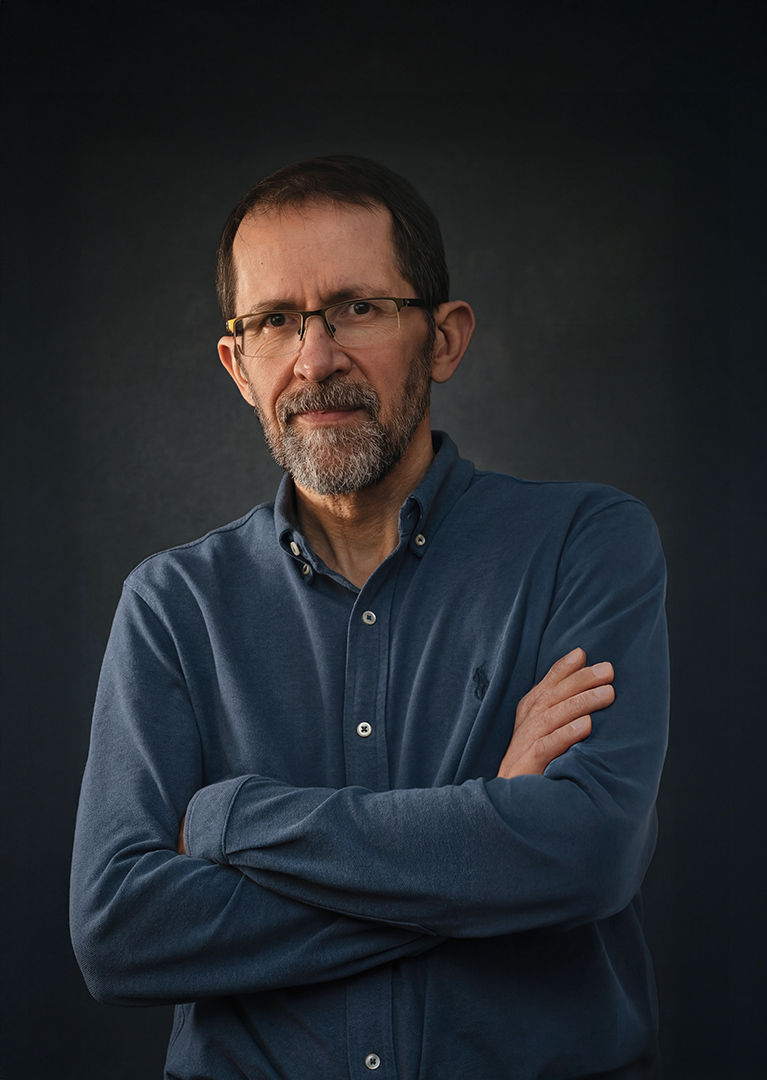
Meet the author
It is increasingly difficult to ignore that, despite unprecedented scientific and technological progress, modern life feels psychologically ungrounded. Meaning, purpose, self-worth, and belonging — once carried by shared narratives — no longer rest on stable foundations. We have improved almost everything except our understanding of what it means to exist within it all.
In his latest work, Philippe Ingels turns from the isolated puzzle of consciousness to the wider structural problem of human orientation. Rather than asking only what mind is, he asks why the frameworks built to explain it have failed to stabilise our inner lives. Approaching the question without allegiance to religion, academic philosophy, or therapeutic orthodoxy, he traces the fault line back to a deeper, necessary but incomplete assumption: that mind and world are fundamentally separate.
Drawing on years of independent inquiry, systems thinking, and cross-disciplinary exploration, Philippe develops a unified model in which reality and consciousness arise from the same informational foundation. Within this framework, the Self is neither illusion nor isolated substance, but an emergent centre within a continuous causal flow. Meaning and purpose are reframed as structural features of participation rather than beliefs imposed from outside.
The result is Flowmonics — not as an institution or ideology, but as a distributed, self-correcting framework intended to restore orientation without reverting to dogma. His aim is neither comfort nor rebellion, but coherence: a way of understanding that preserves agency, responsibility, and love without relying on supernatural authority or collapsing into relativism.
Philippe continues to develop Flowmonics as both a philosophical model and a lived movement, focused on addressing the meaning crisis at its roots and exploring what conscious participation in reality might yet become.
Reasons why this book is important
The meaning crisis confronted
At a time when societies remain outwardly functional yet increasingly inwardly disoriented, this book identifies the structural fracture beneath modern life and offers a path beyond prolonged psychological stagnation.
A new foundation for reality
By dissolving the assumed divide between mind and world, it lays the groundwork for a future science and philosophy capable of integrating consciousness into our understanding of the universe.
The evolution of responsibility
By expanding moral judgement back into causal understanding, it enables coordinated action without perpetuating cycles of blame, fear, and division at personal or collective scale.
The next stage of identity
By reframing the Self as a participatory centre within a unified process, it points toward a developmental shift beyond separation-based identity and survival-driven culture.


This is what the
book does
Nearly four hundred pages that will completely transform your understanding of the nature of the world and the part you play in it.
NO! This is not a motivational manifesto. It will not hand you a comforting narrative or ask you to adopt a new identity.
Instead, it examines the foundations beneath meaning, morality, selfhood, and belief — and shows where they fractured.
What follows is not inspiration, but reconstruction.
As the argument unfolds, familiar assumptions about survival, responsibility, love, and purpose are dismantled and reassembled within a unified framework. What emerges is not a doctrine, but a coherent orientation: a way of situating yourself within reality without appealing to superstition or retreating into relativism.
The result is neither rebellion nor reassurance, but stability.
-
First, we examine why modern frameworks failed to ground meaning, purpose, self-worth, and belonging.
-
Next, we reconstruct reality and the Self as expressions of a single causal process.
-
Then, we trace the implications — for responsibility, love, identity, death, and the future of conscious life.
Excerpts from the book
The old ways of understanding are collapsing under the weight of their own limits. Science grounds us in truth, but cannot tell us why we are here. Faith lifts us with meaning and purpose, but often without a foundation anchored in verifiable reality.
"
"
The closer your beliefs are to facts, the more effectively you can navigate the world and live with clarity, integrity, and genuine freedom.
"
"
In short, for life to gain access to that foundational informational layer would mean that the emergent pattern had learned to read and write the very alphabet from which it’s composed.
"
"
The Self, then, isn’t a substance or object but an emergent sense of locality — a sense of what’s always “here” at the centre of all awareness.
"
"
This non-physical mind and existence is not “supernatural” in the sense of breaking the rules of reality. It is still part of the same world we inhabit now, governed by the same basic principles — but expressed in a different form.
"
"
Decoding that intuition into the symbolic language of Sensicles gave us the answer to the mind-body problem and so much more. This language of reality was always there, right in front of us.
"
"
It might come as a pleasant surprise to learn that love is a principle woven into the fabric of reality long before it was felt by minds.
"
"
The problem has never been a lack of desire, conviction, or moral seriousness. The problem is that love has been treated as something one ought to do, rather than as a way of organising oneself from the inside.
"
"


The start of something different
Flowmonics is the basis for a Second Enlightenment Transformation. Receive my newsletter and stay ahead with exclusive announcements and previews.